
Music Industry Explained / Vesta Journal
Record Labels vs. Music Publishers: Who Handles What?
A record label releases recordings. A music publisher works with the songs behind them. Learn how their roles differ, why one release can generate separate royalty streams, and what artists and independent labels need to keep track of.

Your single is ready to release. A label wants to work with you, someone asks who handles your publishing, and the distributor needs your songwriting credits. Aren’t they all dealing with the same track?
They are involved in the same music, but they handle different parts of its business.
A record label works with recordings. A music publisher works with songs and compositions. For an artist who writes and performs their own music, both can matter to the very same release.
Here is how to tell them apart, with one fictional single as an example.
One song, two different works
Imagine Maya writes a song called “After Hours” with her collaborator Jules. Maya then records it, and Northside Records agrees to release that recording.
There are two works to keep track of:
- The composition: the underlying music and any lyrics written by Maya and Jules.
- The sound recording: the particular recorded performance that listeners will hear, often called the master.
If another singer records their own version of “After Hours,” they create a different recording of the same composition. The original songwriters remain relevant even though Maya’s recording is not being used.
That distinction explains why one release can involve separate companies, agreements, and royalty statements.
What does the record label handle?
Northside’s work focuses on Maya’s recording and its release.
Depending on their agreement, the label might help fund production, coordinate artwork, organize distribution, plan promotion, and account for recording revenue. It may work with Maya on a single project or a longer release schedule.
The rights arrangement can also vary. A label might own the master, license it for an agreed period, or provide services while the artist retains ownership.
Releasing a recording through a label does not automatically give that label ownership of the underlying song. Northside’s recording agreement and Maya and Jules’s songwriting interests need to be understood separately.
What does a music publisher handle?
A publisher works with the composition and the people who wrote it.
For “After Hours,” that could involve registering the song with relevant organizations, maintaining writer and ownership information, administering licenses, tracking uses, and collecting and accounting for publishing income.
A publisher may also help create opportunities: introducing collaborators, arranging writing sessions, pitching songs to other performers, or seeking placements in film, television, games, and advertising.
The balance varies. A full-service publisher may provide creative development alongside administration. A publishing administrator may focus mainly on registrations, licensing administration, and royalty collection.
The name of the service matters less than the responsibilities it actually takes on.

Can one stream generate income on both sides?
Yes. An eligible stream of Maya’s recording can generate recording royalties and publishing royalties.
The recording side is typically paid through the label or distributor that delivers the music. The composition side follows publishing arrangements, which can involve publishers, administrators, collecting societies, and mechanical licensing organizations.
Maya may therefore receive income in two capacities: as a recording artist under her recording arrangements and as a co-writer under her songwriting arrangements.
Jules, who helped write the song but did not perform on Maya’s recording, can still receive songwriting income. Being a songwriter does not require being the person listeners hear singing.
There is no universal split between all these participants. Payments depend on the rights involved, the service, the territory, and the relevant agreements.

Does a publishing deal come with a record deal?
You should treat them as separate arrangements unless the agreements clearly say otherwise.
An artist may work with a label and a completely unrelated publisher. A songwriter may have a publisher without releasing recordings as an artist at all.
A wider music group can also operate both recording and publishing businesses. Sharing a parent company does not make those businesses interchangeable.
For Maya, agreeing that Northside will release her master should leave a clear answer to a separate question: who is administering her share of “After Hours,” and who is administering Jules’s?
Where do collection societies fit?
A publisher and a collection society have different roles, although they often work together.
Organizations such as performing rights organizations, often called PROs, license certain uses and collect royalties for the repertoire they represent. Publishers can register works and receive income through those organizations, alongside other collection and licensing routes.
For a songwriter, appointing a publisher is one decision; making sure works and shares are correctly registered with the appropriate organizations is another part of the process. Which organizations are relevant depends on the rights and territories involved.
Do you need a publisher to release music?
You can release a recording without signing a traditional publishing deal.
Some writers manage their publishing themselves. Others use an administrator or choose a publisher for its creative support and business reach.
What matters is having a clear plan for the songwriting side. Uploading a recording through a distributor should not be assumed to register the composition everywhere or collect every publishing royalty. Some distribution businesses offer publishing administration separately, so check what you have actually enrolled in.
For Northside, a useful first step is to keep two sets of information clear: the recording’s rights and revenue arrangements, and the song’s writers, agreed shares, and publishing representation.
Building a label with a clearer understanding
A new label can focus on the recordings it believes in while working alongside writers and their publishing partners. It does not need to become every kind of music business at once.
For your next release, establish who handles the master, who handles the composition, and how each participant will receive information and payment.
Vesta White-Label Express helps labels organize artists, releases, and distribution through a portal carrying their own brand. Explore the Vesta demo to see how it could support the recording side of your business.
Keep exploring
More articles in Music Industry Explained

Managers, Agents, and Music Companies: Who Does What for an Artist?
Who books the show, plans the career, pitches the interviews, and keeps everything moving? Learn how managers, booking agents, promoters, publicists, and other music professionals work together, and how to build a team around the support you need.
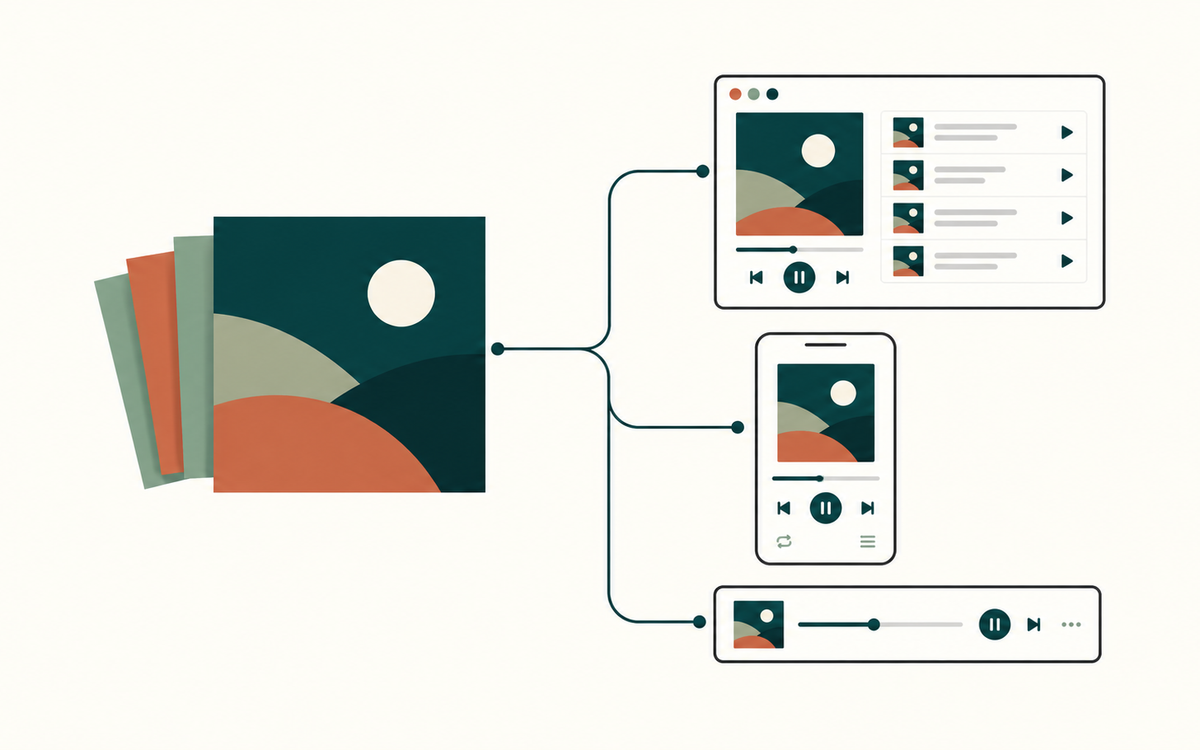
Music Distributors Explained: How Your Music Reaches Streaming Platforms
How does a finished recording reach Spotify and Apple Music? Discover what distributors, aggregators, and white-label providers do, how they differ from record labels, and how releases and revenue move through the system.

Record Labels Explained: Major, Independent, and Everything Between
Major labels, independent labels, imprints, and artist-owned companies: what do these names actually mean? Discover how record labels work, how they fit together, and where your own label could belong.