
Music Industry Explained / Vesta Journal
Music Distributors Explained: How Your Music Reaches Streaming Platforms
How does a finished recording reach Spotify and Apple Music? Discover what distributors, aggregators, and white-label providers do, how they differ from record labels, and how releases and revenue move through the system.
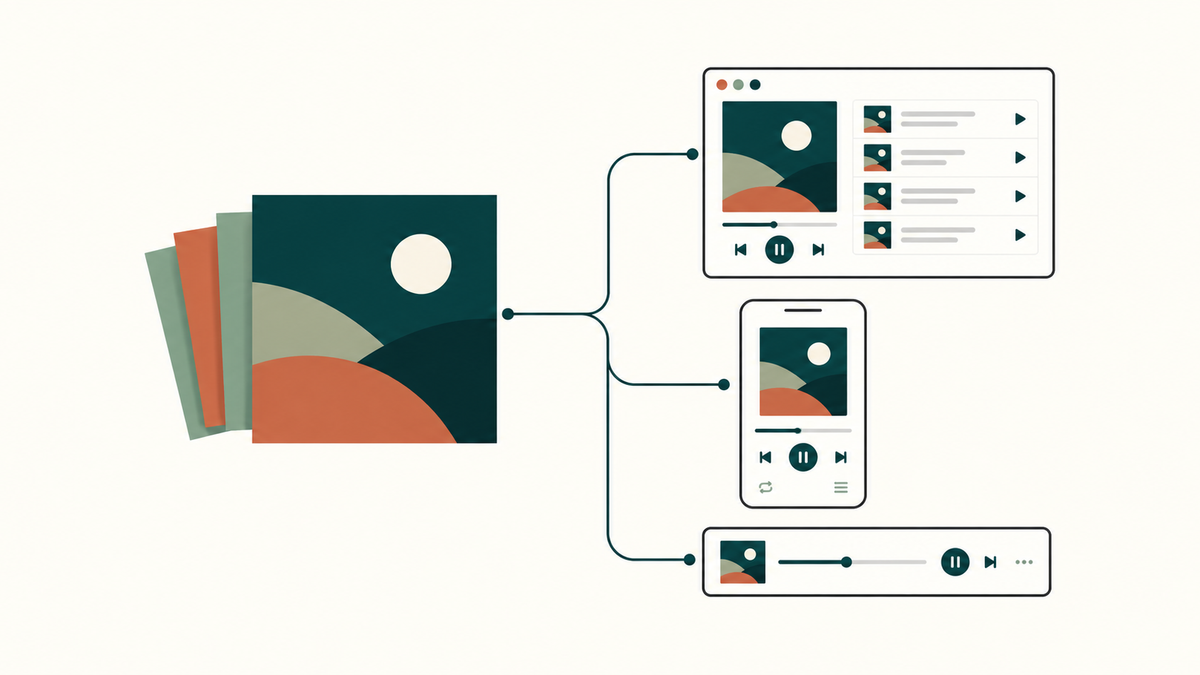
The master is finished. The artwork is approved. Your artist is ready to announce a release date. But how does that folder of files become a single people can play on Spotify, Apple Music, and other services?
That is where music distribution comes in.
A music distributor connects artists and labels with the services where listeners stream or buy recordings. Around that connection sits a whole process: preparing releases, delivering information, managing updates, and reporting revenue.
Here is how it works, and why distributors, aggregators, and white-label providers can sound similar while offering different experiences.
What does a music distributor actually do?
Imagine Northside Records, our fictional independent label, preparing a new single. Its team has the audio, artwork, artist names, credits, and intended release date.
Instead of submitting that package separately to every streaming service, Northside uses a distributor. Depending on the provider, the process can include:
- Collecting release assets: audio, artwork, and the information that identifies the recording.
- Checking submissions: flagging missing information or material that does not meet delivery requirements.
- Delivering the release: sending the package to the selected music services.
- Managing changes: submitting supported corrections, updates, or takedown requests.
- Reporting activity and revenue: making information and recording royalties available as reports and payments are processed.
Northside still needs to supply accurate information, have the necessary rights, and prepare the release on time. The distributor provides the route to market and the tools around it.
Is Spotify a distributor?
Spotify and Apple Music are listener-facing music services. In industry conversation, you will often hear them called DSPs, short for digital service providers.
A distributor supplies recordings to these services. The services make them available to listeners according to their own systems and requirements.
Think of Northside's distributor as its delivery and reporting partner, and the DSP as the place where the audience listens. They occupy different positions in the release process.
What is an aggregator?
“Aggregator” is commonly used for a service that brings together releases from many artists or labels and delivers them to digital music services.
In practice, aggregator and digital distributor often describe overlapping work. There is no useful rule that every aggregator offers one fixed package while every distributor offers another.
One provider might focus on straightforward uploads. Another might include catalog tools, team access, marketing support, or services for larger labels.
The useful question is what the company handles for you, rather than which of the two names it uses.
How is a distributor different from a record label?
A label chooses the music it wants to release and defines the support it offers artists. That might include creative direction, funding, promotion, and release coordination.
A distribution service focuses on getting recordings to music services and handling the associated delivery and reporting work.
Northside can therefore be a label while working with a separate distributor. It keeps its own identity, artist relationships, and release strategy.
An artist can also work directly with a distributor and release without signing to a label. Distribution gives them access to the release infrastructure; they can build their team and campaign around it.
Where do artist and label services fit?
Some distribution businesses offer additional support, often described as artist services or label services.
Depending on the agreement, this might include campaign planning, marketing, audience development, funding, or more involved catalog management. Some packages are available through a subscription; others are offered selectively through individual deals.
That creates overlap with the work a record label might do. A company calling itself a distributor can offer much more than delivery, while an artist choosing a basic distribution plan may handle most of the surrounding work themselves.
Look at the actual package: what is included, who will do the work, and how the service is paid for?
What is a white-label distribution provider?
A white-label provider supplies infrastructure that another business can offer under its own branding.
For Northside, that could mean an artist portal carrying its name, where its roster submits releases and accesses information. The technology provider supplies the systems behind that experience.
The business using the platform might be a record label, an artist-services company, or a distribution business itself. White-label describes how the service is presented and supplied; it does not automatically make the customer a record label.
There can also be several companies behind a delivery. The business an artist logs in to may work with another technology or distribution partner. What matters to the customer is having clear responsibilities, reliable support, and understandable reporting.
How does the money come back?
Distribution works in two directions. Release files and information go toward music services; recording-revenue reports and payments come back through the relevant partners.
The distributor then accounts to its customer under their agreement, including any applicable fees or deductions. If Northside is the customer, it must also account to its artists according to their arrangements.
Live listening statistics and royalty statements serve different purposes and may cover different periods. A stream appearing in an analytics dashboard does not necessarily mean the associated revenue is already available to withdraw.
Also check which royalties a service covers. Standard recording distribution should not be assumed to collect every kind of songwriting or publishing income. Additional administration services may require separate enrollment.

Choosing a setup that fits your next release
Start with the work you need to do. A solo artist may want a simple release account. A label managing several artists may need permissions, shared release tracking, and clearer reporting. A business offering distribution to customers may want its own branded portal.
Compare the full service: delivery destinations, support, reporting, subscriptions, commissions, and any additional charges. Ask what happens when you need a correction or want to move your catalog.
For Northside, the right setup is one its team and artists can use confidently from the first submission onward.
Vesta White-Label Express brings artist accounts, release workflows, and distribution together in a portal carrying your brand. Explore the Vesta demo to see how that could work for your label or music business.
Keep exploring
More articles in Music Industry Explained

Managers, Agents, and Music Companies: Who Does What for an Artist?
Who books the show, plans the career, pitches the interviews, and keeps everything moving? Learn how managers, booking agents, promoters, publicists, and other music professionals work together, and how to build a team around the support you need.

Record Labels vs. Music Publishers: Who Handles What?
A record label releases recordings. A music publisher works with the songs behind them. Learn how their roles differ, why one release can generate separate royalty streams, and what artists and independent labels need to keep track of.
Record Labels Explained: Major, Independent, and Everything Between
Major labels, independent labels, imprints, and artist-owned companies: what do these names actually mean? Discover how record labels work, how they fit together, and where your own label could belong.