Music Distribution / Vesta Journal
How to Start an Independent Record Label: From Your First Artist to Your First Release
Starting a record label begins with the music... but what comes next? Learn how to define your label’s purpose, work with artists, plan your budget, and take your first release from idea to launch.

You have found an artist you believe in, heard a track you want people to discover, and started thinking about a label name. Now comes the question that turns the idea into a business: what will an artist gain by releasing with you?
The answer might be a recognizable sound, access to a local scene, funding, creative direction, or help organizing and promoting releases. Get specific about that contribution before building a roster.
To make the process concrete, imagine Northside Records: a fictional label starting with two artists and one single. Here is how it could move from an idea to its first release.

1. Give the label a clear purpose
Start with the music and the audience. What connects the artists you want to work with? Where do their potential fans already discover music?
“Independent music” is a broad starting point. “Electronic releases from artists in our local club scene” gives you a clearer direction for finding collaborators, approaching DJs, and choosing promotion channels.
Then define your offer to artists. Northside might commit to coordinating artwork, arranging distribution, funding a modest campaign, and reporting income clearly. Those are responsibilities the founders can plan and budget for.
Your first artists should understand what you will do and what they will still handle themselves.
2. Set up a business you can keep track of
Choose a name and check relevant business-name and trademark records before investing in the identity. Secure suitable website and social accounts, then work through the registration, tax, and banking requirements where you operate. The appropriate structure depends on your location and circumstances.
If you have co-founders, agree on ownership, responsibilities, spending authority, and what happens if someone leaves. Keeping records from the beginning makes later decisions easier.
Next, build a budget for the first release. Include artwork, mixing or mastering where needed, distribution, promotion, and any professional advice. Separate recurring expenses from costs attached to that particular single.
Northside’s first budget should answer a practical question: can we meet our commitments if this release earns very little?
3. Agree on rights, costs, and responsibilities
Before announcing the partnership, put the artist relationship in writing.
The agreement should address which recordings it covers, what rights the label receives, how long the arrangement lasts, and how income is divided. It should also explain which expenses can be recovered from revenue, how that calculation works, and when statements and payments are due. Have a qualified music lawyer review the arrangement.
A revenue split becomes much more meaningful when both sides understand what happens to costs. If Northside pays for artwork and advertising, the artist should know whether those expenses are recovered before revenue is shared.
Keep recording rights and songwriting rights distinct. A sound recording and its underlying composition are separate copyright-protected works; an agreement covering one does not automatically settle the other.
Identify any samples, licensed beats, or other third-party material early so the necessary permissions can be checked before delivery.
4. Choose how releases will be managed
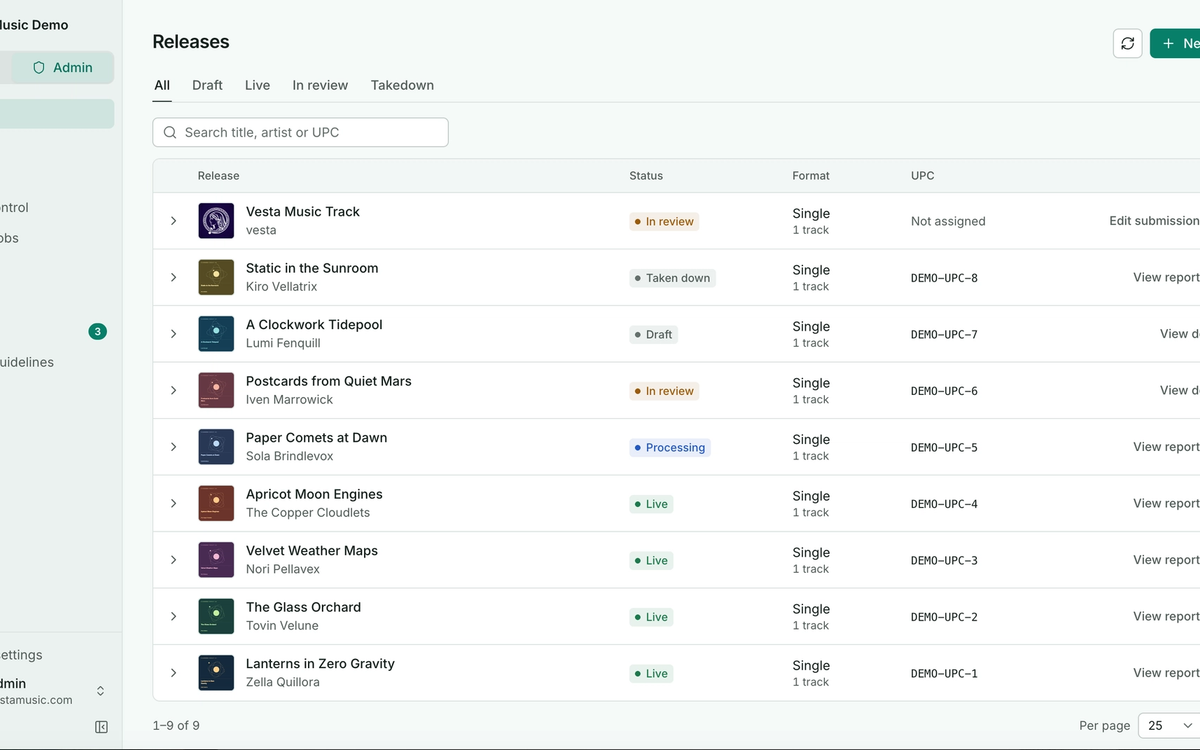
Distribution gets your releases to digital music services. Your choice of platform also affects the work around delivery: collecting assets, reviewing information, tracking progress, and accessing reports.
For a small label, compare providers using the roster and release schedule you actually expect. Look at artist limits, fees, reporting, support, and how easily your catalog information can be exported.
Decide who will upload music and who will approve it. Even with two artists, having one agreed process helps prevent uncertainty over which file or release date is final.
If you want artists to submit music through a portal carrying your label’s branding, explore a white-label platform. Vesta White-Label Express provides a branded portal for growing labels and teams.
5. Turn the first single into a release plan
Work backward from the intended release date, allowing time for review, corrections, delivery, and promotion. Check your distributor’s lead times before announcing the date publicly.
Northside’s first-release checklist could look like this:
- Final audio and artwork approved by the artist and label.
- Artist names, titles, credits, and other metadata checked.
- Rights documentation and agreed revenue shares recorded.
- Delivery submitted and status monitored.
- Promotional assets, outreach, and release links prepared.
- A named person responsible for checking the release when it goes live.
For Spotify editorial consideration, eligible unreleased music can be pitched through Spotify for Artists. Spotify recommends delivering at least seven days before release, and pitching does not guarantee placement. Build additional time into your own schedule for distributor processing and corrections.
6. Keep working after release day
Choose a few promotional activities you can execute well. For Northside, that might mean targeted DJ outreach, short artist videos, and support from relevant local events or communities.
Give each activity an owner, a deadline, and a purpose. After release, examine which efforts brought listeners who saved the track, followed the artist, or returned to hear more.
Track spending alongside results. As royalty reports arrive, reconcile the income and apply the agreed accounting terms. Keep artists informed, including when there is little revenue to report.
Before scheduling the next single, review the process together. What arrived late? Which outreach earned a response? Which task took more time than expected?
Those answers give the label a stronger starting point for its second release.
Put your first release into motion
Start with a manageable commitment: one artist relationship, one release budget, and one process everyone understands.
If you are ready to organize releases under your own brand, explore the Vesta demo or view White-Label Express plans.
Keep exploring