
Music Distribution / Vesta Journal
What Is White-Label Music Distribution?
What if your artists could release music through a platform carrying your label’s name and brand? Discover how white-label music distribution works, how it differs from a standard distribution account, and when it makes sense for you.
What Is White-Label Music Distribution?
Running a record label means coordinating artists, releases, and royalties. As your roster grows, the way you manage that work becomes increasingly important.
White-label music distribution gives your business a distribution platform with your branding, powered by an existing technology provider. Your artists use a portal associated with your company, while the provider supplies the underlying distribution infrastructure.
Here is how it works and what to consider before choosing a platform.
How does white-label music distribution work?
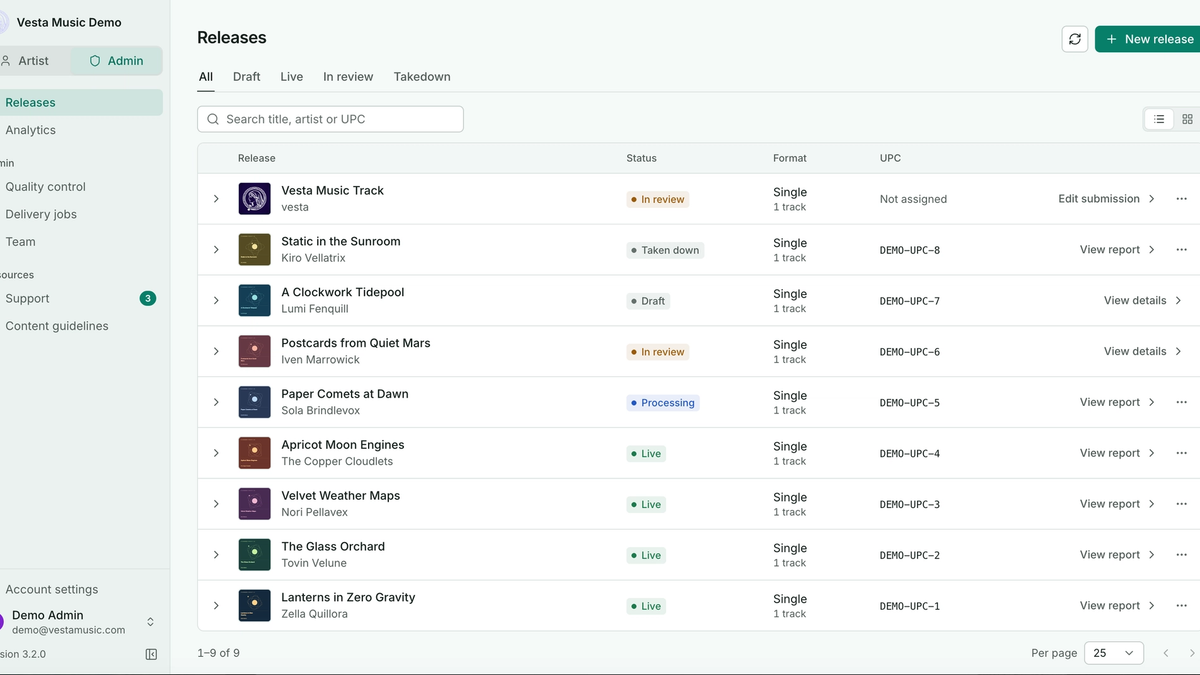
A white-label provider supplies software that your business can use to offer music distribution under its own name. Depending on the service, this can include artist accounts, release uploads, catalog management, delivery, analytics, and royalty reporting.
Imagine you run a label called Northside Records with ten artists. You want them to submit releases through a Northside-branded portal, with your team overseeing the catalog. A white-label platform can provide that shared workspace without requiring you to develop the software yourself.
A typical release moves through several stages:
- Submission: The artist or label uploads the audio, artwork, and release information.
- Review: The submission is checked, with corrections requested where necessary.
- Delivery: The approved release is sent to the selected digital music services.
- Reporting: Usage and revenue information becomes available as it is received and processed.
The exact workflow, access permissions, and division of responsibilities depend on your provider and plan.
Who is it for?
White-label distribution can suit several types of music businesses:
- Independent labels that want a branded workspace for their roster.
- Managers and artist-service companies coordinating releases for multiple clients.
- Distribution businesses offering a service to other artists and labels.
- Music technology companies adding distribution to an existing product.
For a label, the value might be a more organized release process. For a distribution business, the platform may support the service it sells to customers. Start by defining which of these you need.
What should you look for in a provider?
Before choosing a platform, walk through a real release from upload to reporting. Ask who handles corrections, how your team tracks progress, and what artists can see.
Then assess five areas:
Branding. Which parts of the experience can carry your identity? Check the portal, domain options, and customer communications.
Catalog management. Can your team find releases, monitor their status, and manage access without creating extra administrative work?
Royalties and reporting. Ask what reports are available, how fees appear, and how artist balances and payouts are handled.
Total cost. Compare subscriptions, royalty commissions, artist limits, release allowances, and optional services using your expected activity.
Portability. Find out how you can export your data and move your catalog if your needs change.
Do you need to build your own software?
A ready-made branded platform can suit a business that wants an established interface and workflow. An API may be more appropriate when distribution needs to sit inside a product you are developing.
With an API, your developers connect your application to the provider’s systems. That gives your team more responsibility for building and maintaining the customer experience. Choose according to your product needs and development resources.
Getting started with Vesta
Vesta offers white-label music distribution for labels, teams, and music businesses.
Vesta White-Label Express provides a branded portal for growing rosters, with plans covering 5–50 artist profiles. Vesta Enterprise supports higher-volume operations and offers full API access for businesses that need distribution integrated into their own product.
To see how the workflow could fit your business, explore the Vesta demo or compare the available plans.